
FLORY

Hold And Drag
Hold And Drag
The Smart Pot began as a simple trash bin from Lidl, selected for its clean design and durable structure. By repurposing this container, the build avoids unnecessary 3D-printing material while providing a stable and aesthetic outer shell. Inside, a custom 3D-printed assembly fits securely and holds all internal components, including the soil chamber, electronics, pump mechanics, and integrated watering system. Approximately one third of the planter's internal volume functions as a dedicated water reservoir, forming the foundation of the automatic irrigation system.
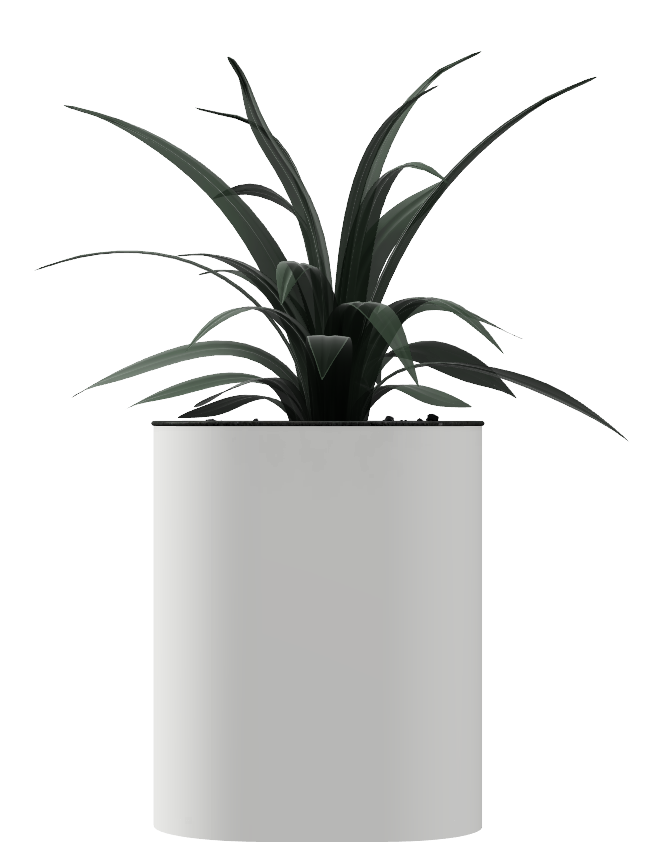
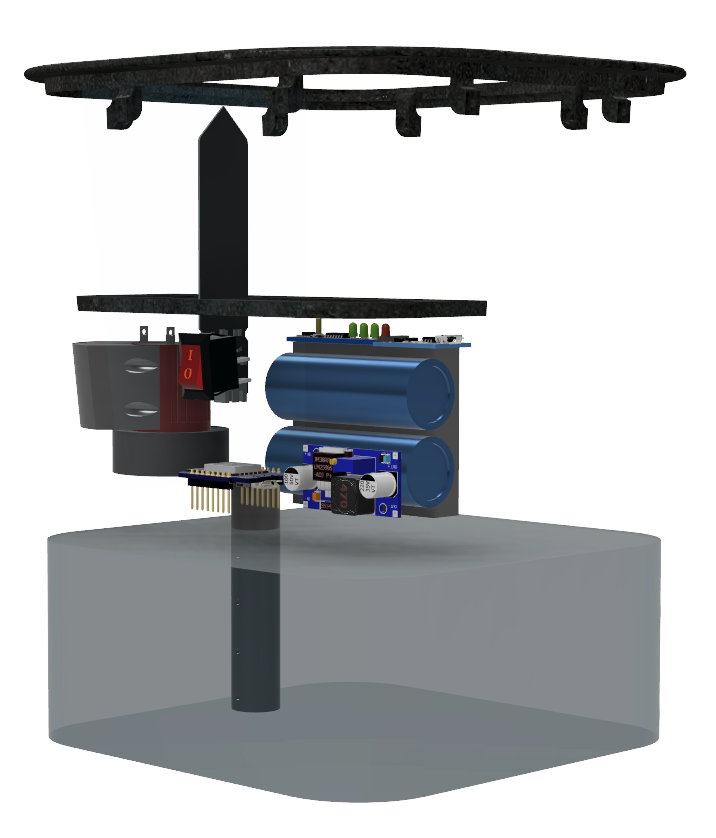
The 3D-printed assembly rests on its upper edges, with a feed pipe extending down into the reservoir. A custom MOSFET-driven pump controller regulates pump speed and supplies water through silicone tubing routed around the perimeter. These tubes feature precision holes to distribute water evenly across the soil. A custom capacitive water-level sensor positioned within the reservoir continuously reports fill level, while the capacitive soil-moisture sensor tracks actual hydration in the root zone.
The system now operates from a stable external power supply rather than battery power. An ESP-based microcontroller manages all logic and exposes a complete HTTP API for real-time configuration, pump control, calibration, and sensor monitoring. An SD-card subsystem provides persistent logging, static file hosting, and OTA firmware updates. Pump speed, watering thresholds, and system parameters are fully software-defined.
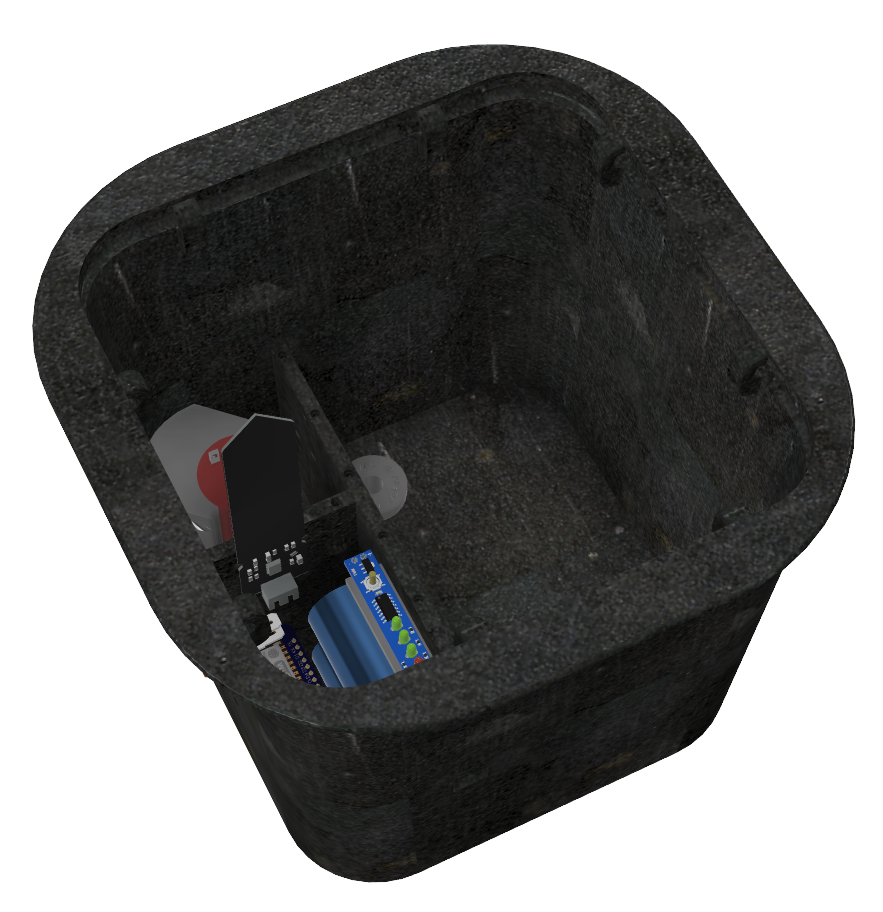
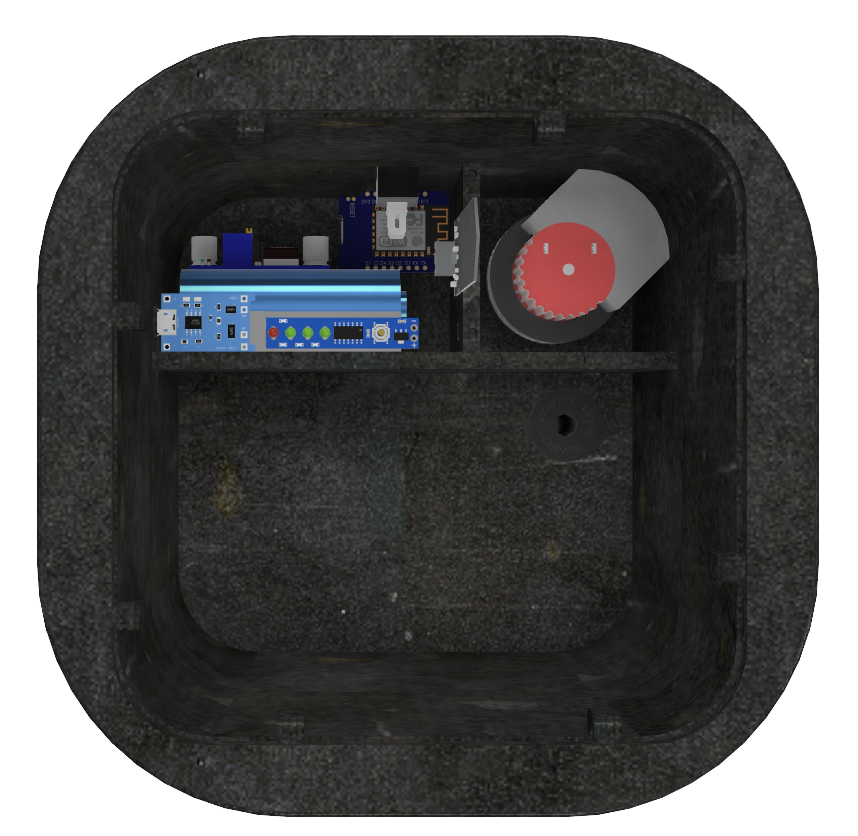
The Smart Pot integrates multiple sensors to maintain reliable plant care: a custom capacitive water-level sensor, a capacitive soil-moisture probe, and an external temperature/humidity module for ambient monitoring. All calibration values and settings are stored in non-volatile memory, ensuring long-term accuracy. The firmware's architecture separates networking, sensing, and pump management into dedicated tasks, ensuring responsiveness even during file uploads or logging. Overall, the system combines custom electronics, precise sensing, and a network-enabled control layer into a robust and extensible automated planter.
